
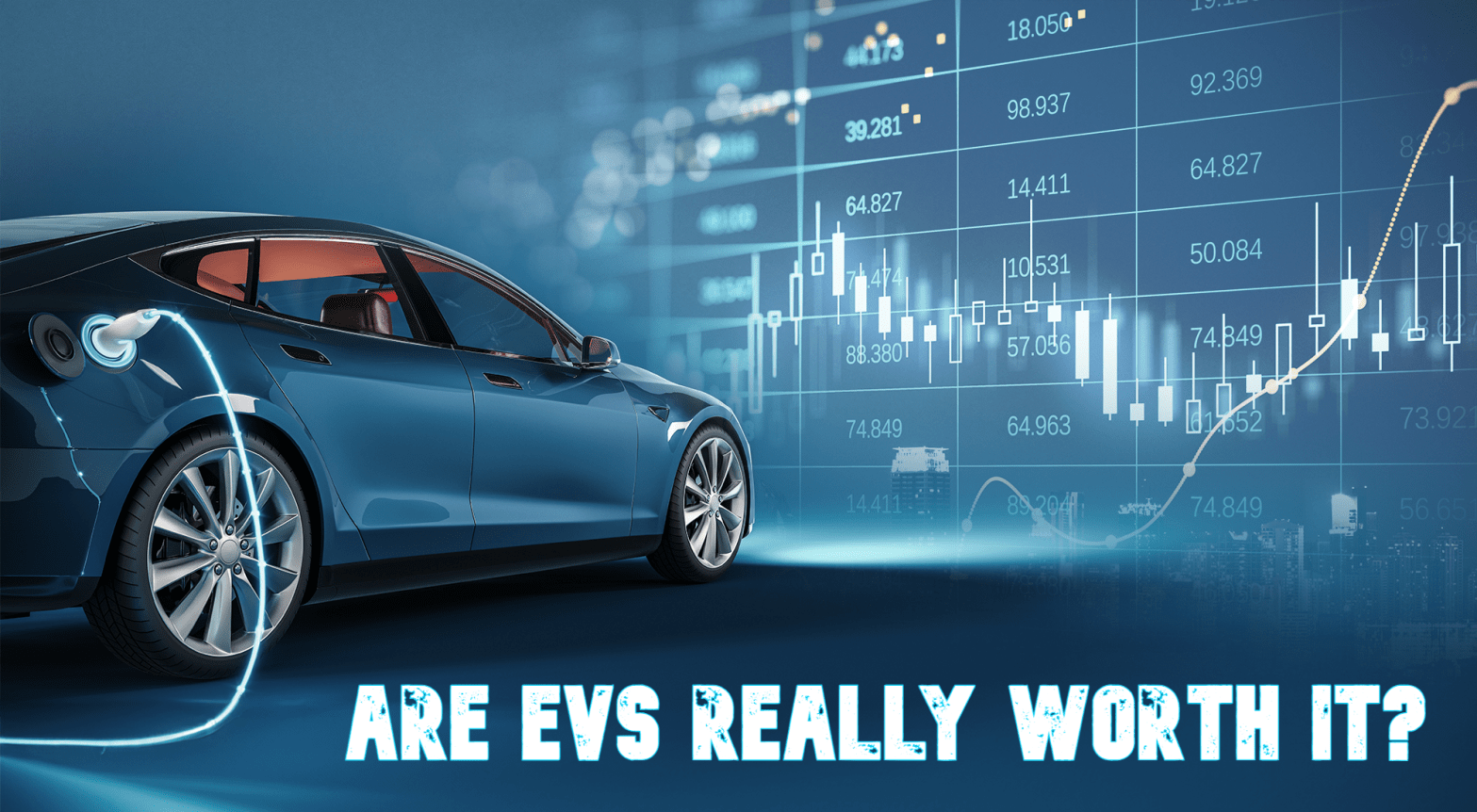
As time goes on, innovations are made in technology. I bet that you’ve noticed that things today are not like the things a couple of years ago because they are more modernized and cutting-edge, especially cars!
In this futuristic study, I continue to break down EVs, explaining their advantages and disadvantages, and finally ending with my opinion on EVs.
Recommended Pre-Read – What’s An EV? – A Futuristic Study
JUMP TO A SECTION:

Advantages
- Zero Tailpipe Emissions: EVs produce no exhaust, which drastically improves local air quality. While making the battery has a “carbon debt” (it takes more energy to build), research shows that after about 20,000 miles, an EV becomes much cleaner than a gas car over its lifetime.
- Major Maintenance Savings: Gas engines have about 2,000 moving parts, while EV motors have only about 20. This means no oil changes, no spark plugs, and no timing belts. Plus, Regenerative Braking uses the motor to slow the car down, meaning your brake pads can last over 100,000 miles! Additionally, Solid-State Batteries are the “holy grail” technology starting to appear, promising 600+ mile ranges and 10-minute charging.
- Lower “Fuel” Costs: Charging with electricity is significantly cheaper than buying gas. In 2026, many owners who charge at home during “off-peak” hours (usually at night) are saving roughly $800–$1,000 per year compared to gas car drivers.
- Instant Torque & Silence: Unlike gas cars that need to “rev up,” EVs give you 100% of their power the second you hit the pedal. This makes them incredibly fast and smooth, all while being almost silent, which reduces noise pollution in cities.

Disadvantages
- The “Sticker Shock” (Upfront Cost): Even though prices are dropping, EVs still usually cost more to buy or lease than a gas equivalent. While you save money later on gas and repairs, the initial price tag can still be a hurdle for many families.
- Charging Infrastructure Gaps: We have more chargers than ever, but in 2026, the number of EVs on the road is growing faster than the number of plugs. This can lead to “charger queues” at popular stations, especially on holiday weekends or in rural areas.
- Long “Refuel” Times: You can fill a gas tank in 5 minutes. Even with new “Ultra-Fast” 350kW chargers, it still takes about 15–20 minutes to get an EV to an 80% charge. If you’re using a standard home outlet, it can take over 24 hours!
- Battery Degradation & Mining: Just like a smartphone, EV batteries lose a little bit of capacity every year. While most have 8-10 year warranties, a total replacement out of warranty can cost between $5,000 and $20,000. Also, mining the lithium and cobalt for these batteries remains a complex environmental and ethical challenge.

My Opinion
Now, you’ve looked at both the advantages and disadvantages of EVs. As for me, I think EVs are a great innovation. It’s shocking how a whole car can run on a battery, and it’s becoming very popular too. However, during early phases of development, there’s always more room to improve. As of right now, I would definitely choose a Hybrid Car over Gas or EV.
Here’s a breakdown of why:
Gas Car: Powerful engine, long mileage, robust feeling, but it pollutes the environment
EV Car: Eco-Friendly, modern, futuristic, but very expensive and low mileage
HYBRID Car: A combination of both an internal combustion engine (ICE) and an electric motor and battery to improve fuel efficiency. There are a couple of types of hybrids, but essentially, combining the engine and battery allows for eco-friendliness, great mileage, and a gas-like feel.
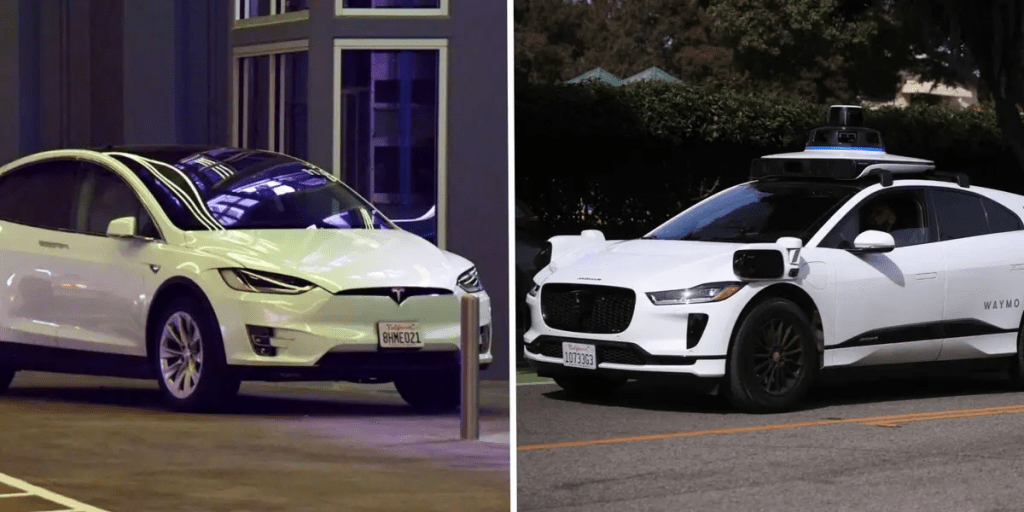
Although EVs are booming, the market is still developing and improving, with advances such as Tesla’s and Waymo’s driverless taxis, which signal further evolution in the car world and hint at driverless cars in the near future.

Sources
Here are my sources for this study:
Image Credits: www.google.com
Top 5 Advantages (The Pros)
| Feature | Key Fact / Data Point | Credible Source |
| Lower Emissions | EVs have a much smaller lifetime carbon footprint than gas cars, even when factoring in battery making. | U.S. EPA |
| Maintenance Savings | EV owners save roughly 50% on repair and maintenance costs over the car’s lifetime. | Consumer Reports |
| Fuel Cost Savings | Charging an EV costs about $550/year, compared to over $1,300/year for a gas car. | The Cool Down / CNET |
| Public Health | Widespread EV use could prevent over 100,000 premature deaths by cleaning up city air. | American Lung Association |
| Energy Efficiency | EVs convert over 77% of electrical energy into power at the wheels, vs. only ~12-30% for gas cars. | Alternative Fuels Data Center |
Top 5 Disadvantages (The Cons)
| Feature | Key Fact / Data Point | Credible Source |
| Higher Upfront Cost | The battery is the main reason EVs are more expensive to buy upfront (though prices are dropping). | Kelley Blue Book |
| Charging Gaps | There is still a “geographic disparity,” with fewer chargers in rural areas compared to cities. | International Energy Agency (IEA) |
| Battery Replacement | While rare, replacing a battery out of warranty can cost between $5,000 and $20,000. | Recurrent Auto / KBB |
| Weather Impact | Freezing temperatures can reduce an EV’s driving range by about 20-40%. | MDPI Scientific Journal |
| Mining Ethics | Mining minerals like lithium and cobalt can cause water stress and soil damage in rural areas. | Farmonaut (2026 Report) |
Closing
Well, folks, that was it for my futuristic study on EVs. I took you on a look back in time to old cars, told you what an EV is, explained its advantages and disadvantages, and finally ended with my opinion on EVs and my research sources.
Please comment on this post if you found this research interesting or helpful, and tell me how I did by sharing your feedback as well! If you liked this, please leave a like and subscribe to my blog for more content like this!

 The Kartik-Sphere
One thought on “Are EVs Really Worth It? – A Futuristic Study”